The 3 Sacagawea Dollars Worth More Than $1 (Most Aren't)
Nearly all 2000 Sacagawea dollars are worth face value, one dollar. Only a few are different. Here are three, and exactly what to look for on each.
All 3 at a glance
- Cheerios Dollar ("Prototype Reverse") — Check the eagle's tail feathers on the back for prominent diagonal lines. NGC says examples typically sell for thousands at auction.
- Speared Eagle (Wounded Eagle) — Look for a pair of raised lines running diagonally across the eagle's breast.
- Sacagawea dollar / Washington quarter mule — A rare mint error: a Washington quarter front paired with a Sacagawea dollar back. Top examples sold for six figures.
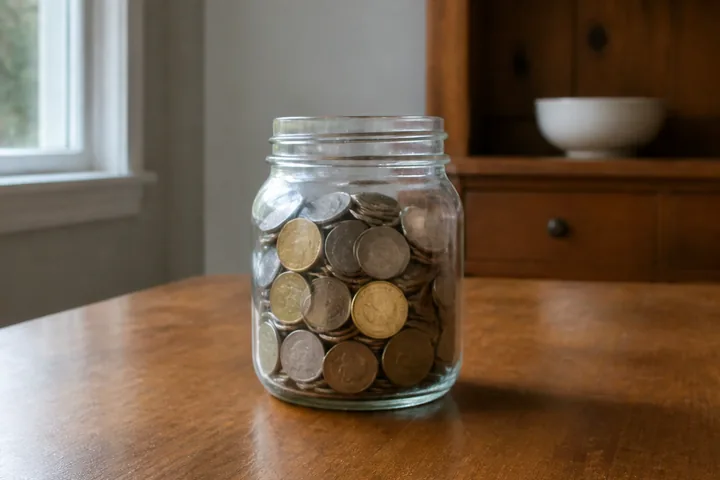
1. The Cheerios Dollar: diagonal lines in the eagle's tail
NGC says nearly all of the 2000 coins are worth face value, but there are a few exceptions. CoinWeek puts it another way: circulated coins are worth face value unless they are a noteworthy variety. The first variety to check for is the Cheerios dollar.
CoinWeek calls these coins Cheerios Dollars. NGC, the coin grading service, attributes them as "Prototype Reverse." The reverse is the back of the coin, and that is where the difference is.
What to look for: Turn the coin over and look closely at the eagle's tail feathers. CoinWeek says this variety features an early reverse design with prominent diagonal lines on the eagle's tail feathers. Those diagonal lines in the tail are what to check for.
A magnifying glass and good light make this much easier. Lay a regular Sacagawea dollar beside the one you are checking, so you can compare the two tails side by side under the same light. Hold each coin by its edges while you look.
What it sells for: NGC reports that examples typically sell for thousands of dollars at auction. CoinWeek says Cheerios Dollars trade for thousands of dollars. Those figures are for genuine examples sold at auction, not what any coin in a drawer is worth. No source gives a price for a worn, circulated Cheerios dollar.
Keep those figures in perspective. The same two sources that describe the Cheerios dollar also say that nearly all 2000 Sacagawea dollars, and all circulated ones that are not a noteworthy variety, are worth face value. An ordinary circulated Sacagawea dollar is worth one dollar.
2. The Speared Eagle (Wounded Eagle)
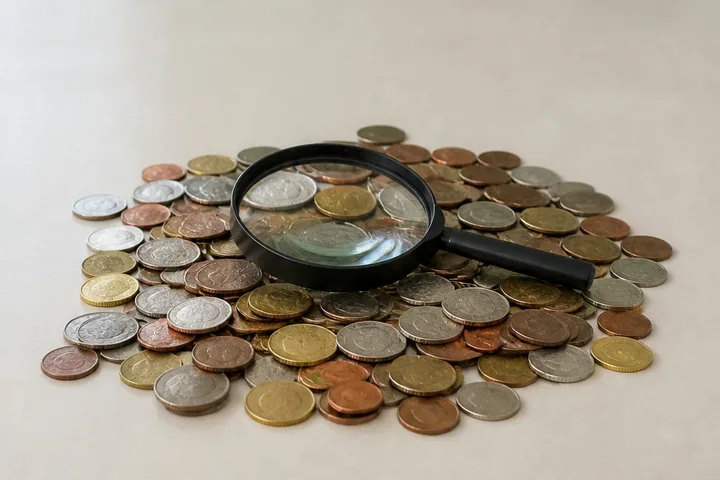
The second coin to look for is the Speared Eagle, also known as the Wounded Eagle. Both names refer to the same variety.
This coin was struck with a damaged die, the tool that presses the design into the coin. Gouges in the die left raised marks on the coins it struck. CoinWeek describes this variety as having a raised die line that cuts through the eagle's torso.
What to look for: Look at the back. NGC says you are looking for a pair of die gouges running diagonally across the eagle's breast. They are raised lines, not scratches cut into the coin. Tilting the coin slowly under a lamp can help you see them.
NGC and CoinWeek describe the mark in slightly different words. NGC calls it a pair of die gouges across the eagle's breast; CoinWeek calls it a raised die line through the eagle's torso. Both point to the same place: the middle of the eagle's body.
Be careful not to mistake ordinary wear or a scratch for this variety. Check that the marks match what NGC describes: a pair of gouges, running diagonally, across the eagle's breast.
What it sells for: NGC reports that a Speared Eagle graded NGC MS 62 realized $94 in a Heritage Auctions sale in June 2018. That is one sale reported by NGC, of one graded coin, not what every Speared Eagle is worth. No source gives a price for a worn, circulated example. It does show this variety can sell for more than its one-dollar face value.
3. The Sacagawea dollar / Washington quarter mule
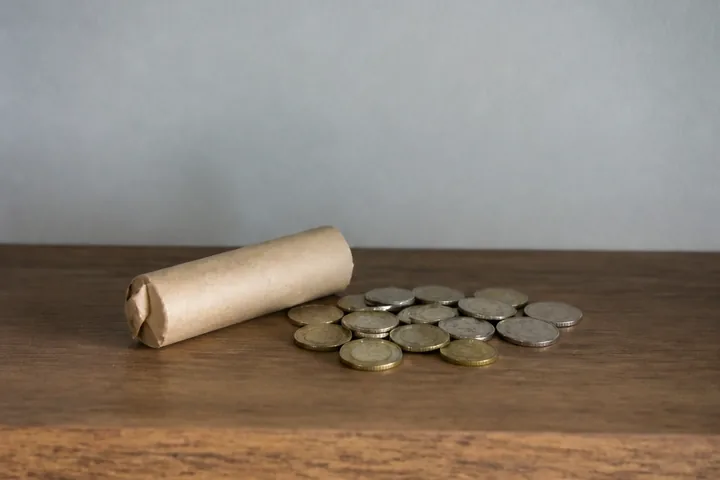
The third coin is a mint error called a mule, where a coin is struck with two designs that were never meant to go together. CoinWeek says a small number of these coins combine the front (obverse) of a Washington quarter with the back (reverse) of a Sacagawea dollar.
CoinWeek reports that it is sometimes called the "Holy Grail of U.S. Mint errors."
What to look for: Start with the back. If it shows the Sacagawea dollar's eagle, turn the coin over. On a normal coin, the front shows Sacagawea. On this mule, the front shows the Washington quarter design instead.
Because a mule mixes two coins, you will not spot it by looking at one side only. The back alone looks like an ordinary Sacagawea dollar, so the front is where the error shows. Look at the design itself, not just the size or color of the coin.
If you think you have found one, do not spend it. NGC says any muled coin should be saved and researched, because it is likely worth quite a bit of money. Keep it apart from your everyday change.
What it sells for: NGC reports that two examples graded NGC Mint Error MS 67 realized $120,000 and $102,000. Those are top sales of exceptional coins, not what a found coin is worth. No source gives a price for a worn, circulated mule. CoinWeek says only a small number were made.
The bottom line
- Nearly every Sacagawea dollar is worth one dollar. Only a few varieties and errors are worth more.
- On the back, check the eagle's tail feathers for prominent diagonal lines and the eagle's breast for raised diagonal gouges.
- If the front of a Sacagawea dollar shows a Washington quarter design, save it and research it.
A minute with a magnifying glass is all it takes to tell an ordinary one-dollar coin from one of the few that collectors pay more for.
Sources
- Face Value: 2000 Sacagawea Dollars | NGC — checked Nov 28, 2026
- Sacagawea Dollar (2000-Date) | CoinWeek — checked Nov 28, 2026
- The Incredible 2000 Sacagawea Dollars — checked Nov 28, 2026
- Face Value: 2000 Sacagawea Dollars | NGC — checked Nov 28, 2026
- Sacagawea Dollar (2000-Date) | CoinWeek — checked Nov 28, 2026
- Face Value: 2000 Sacagawea Dollars | NGC — checked Nov 28, 2026
- Face Value: 2000 Sacagawea Dollars | NGC — checked Nov 28, 2026
- Sacagawea Dollar (2000-Date) | CoinWeek — checked Nov 28, 2026
- Face Value: 2000 Sacagawea Dollars | NGC — checked Nov 28, 2026
- The Incredible 2000 Sacagawea Dollars — checked Nov 28, 2026
- Face Value: 2000 Sacagawea Dollars | NGC — checked Nov 28, 2026
- Face Value: 2000 Sacagawea Dollars | NGC — checked Nov 28, 2026
- Sacagawea Dollar (2000-Date) | CoinWeek — checked Nov 28, 2026
Prices are at time of writing and change by store, region and date. Check the shelf tag before you buy.