Rare Washington Dollar Error? Here's What Yours Is Really Worth
Most 2007 George Washington dollars are worth one dollar, and no source we could read backs the $385,000 claim seen online. Only the two edge errors below are different.
All 4 at a glance
- Ordinary 2007 Washington dollar (normal edge lettering) — If the edge shows the date, mint mark and mottos all the way around, it is a regular one-dollar coin. No source we could read backs the $385,000 claim.
- Missing Edge Lettering ("plain edge") — A smooth, blank edge is a known Mint error. CoinWeek says certified examples sell for $30 to $40 in average grades.
- Doubled edge lettering — Two complete, separate edge legends on one coin. It is a known error. No source gives a Washington sale price.
- Never clean the coin — NGC says improper cleaning permanently harms a coin's surfaces. Leave any error coin exactly as you found it.
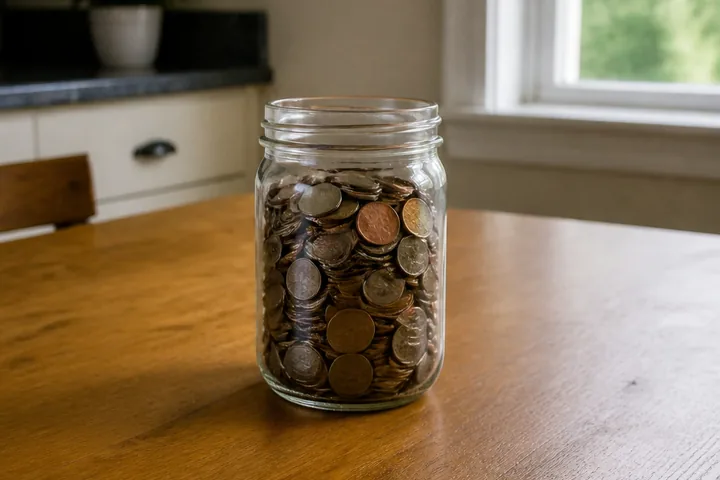
Normal edge lettering: a one-dollar coin
Most 2007 George Washington dollars are worth one dollar, their face value. You may see a $385,000 price claimed online for a Washington dollar, but no source we could read backs that figure. CoinTrackers says most other presidential coins keep only their face value. So if yours looks normal, it is still a perfectly good dollar. You can spend it or keep it.
These coins put some details in an unusual place. The date, the mint mark and the mottos are on the edge of the coin, not on the front or back. That is why the edge is the first place to look.
Turn the coin on its side and roll it slowly between your fingers under a good light. A normal edge reads like this: "2007 P E PLURIBUS UNUM • IN GOD WE TRUST." The letter after the date is the mint mark. If you can read a full line of lettering like this all the way around, you have a regular dollar.
The numbers in the next sections are much smaller than the figures you may see online, and they are the ones the numismatic press actually reports. Keep that in mind before you believe any listing or video that promises a huge price for this coin.
Smooth edge, no lettering: the Missing Edge Lettering error
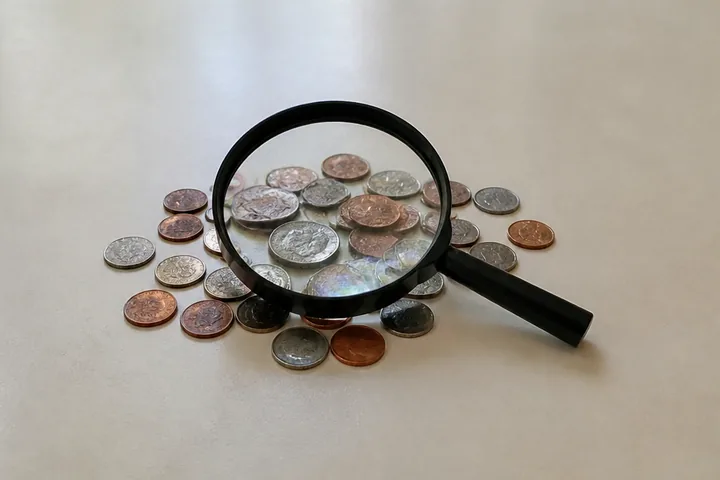
This is the one worth checking for. On some 2007 Washington dollars, the edge lettering was left off entirely. The date, the mint mark, "E Pluribus Unum" and "In God We Trust" are all missing. CoinWeek calls them "plain edge" coins. NGC labels them MISSING EDGE LETTERING.
CoinWeek estimates that about 200,000 were struck, and most of them were found in Florida.
Here is the honest number. CoinWeek says certified examples now go for only $30 to $40 in average grades. That is more than face value, but it is not a fortune. Note that this figure is for certified coins, as CoinWeek states it. NGC also says these error coins carry a collector value greater than their face amount.
Interest started fast. CoinWeek reports that on February 15, 2007, the same day the new Presidential dollars were released to the public, the first "plain edge" example was listed on eBay. That was an early moment of excitement, not a guide to what a typical coin brings today.
What to look for: hold the coin on its side. A missing edge lettering coin has a smooth, blank edge. There is no date, no mint mark and no motto anywhere on it. Turn it all the way around, because the lettering normally runs around the whole edge. If you are unsure, compare it with another dollar from your change. A normal coin's lettering is easy to see side by side.
Doubled edge lettering: two legends instead of one
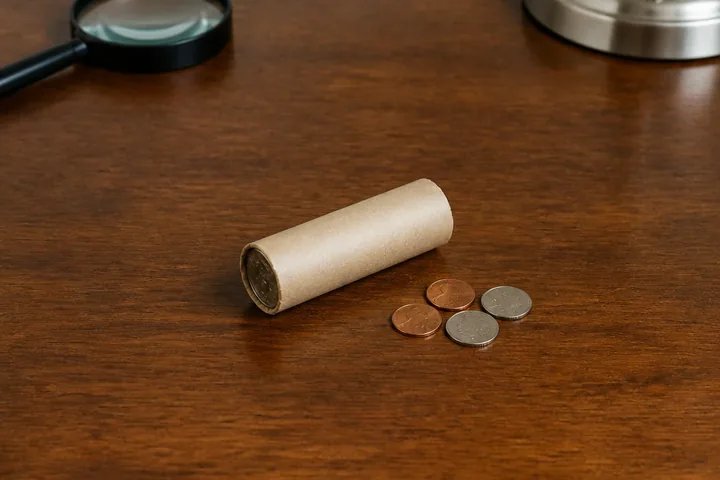
The second edge error to check for is doubled edge lettering. NGC describes it as an error in this series. It happens when a coin passes through the edge lettering machine twice.
What to look for: two complete, separate edge legends. Instead of one line with the date, mint mark and mottos, you will find two full sets of lettering on the same edge. Turn the coin slowly all the way around and read carefully. A magnifying glass and a bright lamp help.
If you can only find one line of lettering, your coin has a normal edge. Go back to the first section and compare it with the normal edge shown there.
None of the sources used here gives a sale price for a Washington dollar with doubled edge lettering, so this article will not guess one. NGC's general point still applies: these error coins have a collector value greater than their face amount.
Whatever you find, don't clean it
If you find either error, don't try to make it shine. CoinWeek's advice is blunt: do not clean your coins under any circumstances. Numismatic News says the same thing: Rule No. 1 is to never clean your coins.
The reason is simple. NGC says improper cleaning will permanently impair a coin's surfaces. Once that damage is done, there is no fixing it.
That means no polish, no scrubbing, no dips and no rubbing with a cloth. Set the coin aside somewhere safe and dry, away from your pocket change, so it doesn't pick up new scratches.
The bottom line
- A 2007 Washington dollar with full edge lettering is a one-dollar coin. No source we could read backs the $385,000 claim.
- A smooth, blank edge is the Missing Edge Lettering error. CoinWeek says certified examples bring $30 to $40 in average grades.
- Two complete edge legends on one coin means doubled edge lettering. No source gives a sale price.
- Never clean a coin you think is an error.
On these coins the edge tells you what you have, and it takes only a few seconds to check.
Sources
- How Much Are Presidential Dollars Worth? — checked Nov 28, 2026
- Presidential Error Coins: George Washington $1 Coin | NGC — checked Nov 28, 2026
- Presidential Error Coins: George Washington $1 Coin | NGC — checked Nov 28, 2026
- Pez Heads and Starburst: Errors and “Errors” of George Washington Presidential Dollars — checked Nov 28, 2026
- Presidential Error Coins: George Washington $1 Coin | NGC — checked Nov 28, 2026
- Pez Heads and Starburst: Errors and “Errors” of George Washington Presidential Dollars — checked Nov 28, 2026
- Pez Heads and Starburst: Errors and “Errors” of George Washington Presidential Dollars — checked Nov 28, 2026
- Pez Heads and Starburst: Errors and “Errors” of George Washington Presidential Dollars — checked Nov 28, 2026
- Presidential Error Coins: George Washington $1 Coin | NGC — checked Nov 28, 2026
- Presidential Error Coins: George Washington $1 Coin | NGC — checked Nov 28, 2026
- Pez Heads and Starburst: Errors and “Errors” of George Washington Presidential Dollars — checked Nov 28, 2026
- Is It Ever OK to Clean Coins? — checked Nov 28, 2026
- Coin Conservation Tips for Collectors - Numismatic News — checked Nov 28, 2026
- Coin Conservation | NGC Conservation | NGC — checked Nov 28, 2026
Prices are at time of writing and change by store, region and date. Check the shelf tag before you buy.