The Mint Stopped Making Pennies. Here's What to Do With the Jar in Your Closet
Most pennies in a jar are worth face value, one cent each, and stay legal tender. Only the wheat cents, 1943 cents and key dates named below are worth a closer look.
All 7 at a glance
- The last circulating penny — The Mint has struck its last penny for circulation. Your pennies are still legal tender at one cent each, so sort the jar before you cash it.
- Wheat pennies (1909-1958) — Pull these out first. Those from the 1950s remain plentiful and largely inexpensive, but the 1909-S V.D.B. and 1914-D below have sold for far more.
- 1943 steel penny — Pull out any 1943 penny. A wartime copper shortage led to a zinc-coated steel cent that year.
- 1943 copper penny — A 1943 penny that does not stick to a magnet could be copper. Set it aside and have an expert check it.
- Pre-1982 copper pennies — The old pre-1982 copper pennies were 95% copper. The 1982 replacement is mostly zinc, so a 1982 date alone does not tell you which you have.
- 1909-S V.D.B. wheat cent — Look for a 1909 date, an S mint mark and V.D.B. at the bottom of the back.
- 1914-D wheat cent — Check for a 1914 date with a D mint mark, and know that counterfeiters add the D.
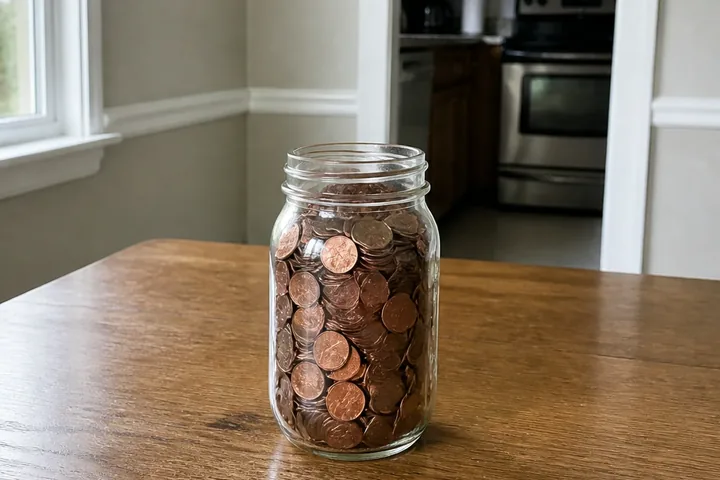
1. The last circulating penny: still worth one cent
The U.S. Mint has struck its final 1-cent coin for circulation, NBC News reported.
That does not take the coins in your closet out of use. The penny will continue to be legal tender for as long as it's around, so the coins in your jar still count at one cent each.
What to do: before you roll them up or spend them, take a few minutes to sort. A few older cents listed below have sold at auction for far more than face value. Work over a towel or a tray so coins don't roll away, and keep any you set aside in a separate container.
2. Wheat pennies (1909-1958): pull them out first
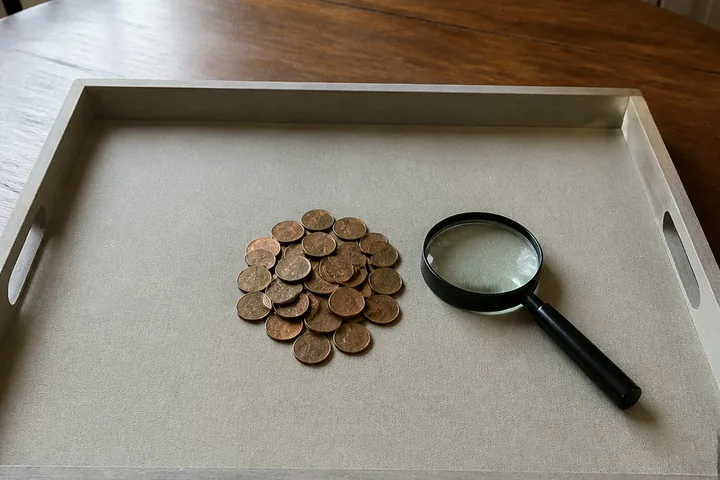
Wheat pennies are Lincoln cents with two wheat heads on the back, a design by sculptor Victor D. Brenner. They were made from 1909 to 1958. 1958 was the last year regular-issue wheat cents were struck.
What a normal one is worth: CoinWeek says wheat cents from the 1950s remain plentiful and largely inexpensive, and some are still occasionally found in circulation.
What to look for: turn each penny over. If the back shows two wheat heads, put it in your wheat pile. Then check the date on the front. Anything dated 1958 or earlier belongs here.
Once your wheat pile is done, go through it again for the two dates in sections 6 and 7 below, the 1909-S V.D.B. and the 1914-D.
3. The 1943 steel penny: the wartime cent
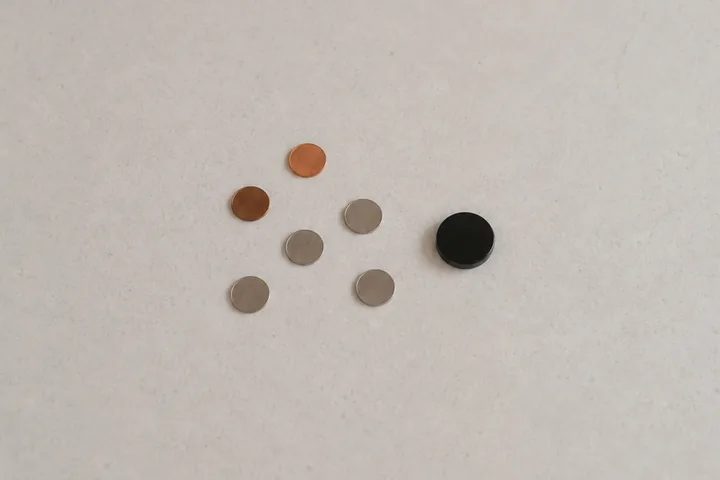
In 1943, a wartime copper shortage led to the introduction of a zinc-coated steel penny, according to the Federal Reserve Bank of Minneapolis.
What to look for: a 1943 date. Set every 1943 penny aside, then use the magnet test in the next section to check whether any of them could be copper.
One graded sale, not the value of a worn steel cent from a jar: CoinWeek lists one example graded PCGS MS68+ CAC that sold at Stack's Bowers in 2020 for $33,600.
4. The 1943 copper penny: the one to set aside
The other 1943 penny to look for is one made of copper instead of steel.
What to look for: any penny dated 1943. Use the magnet test. Genuine copper does not stick to a magnet. If your 1943 penny does not stick, it is only a candidate: set it aside by itself and have an expert look at it before you spend it.
One graded sale, not what a 1943 penny from a jar is worth: CoinWeek lists one graded PCGS AU55 example that sold at Stack's Bowers in 2013 for $317,250.
5. Pre-1982 copper pennies: why older cents differ
Not every penny in your jar is made of the same metal. The old pre-1982 copper pennies were 95% copper and 5% zinc.
The penny the Mint introduced to replace them is 97.6% zinc and only 2.4% copper. The Mint began striking the zinc cents on January 7, 1982, at the West Point Mint, so a 1982 date alone does not tell you which kind you have.
Like all pennies, these are legal tender at one cent each.
6. The 1909-S V.D.B. wheat cent: check three details
This coin is dated 1909 and has an S mint mark. The designer's initials, V.D.B., appear at the bottom of the back of the coin.
What to look for: a 1909 date, an S mint mark, and the letters V.D.B. at the bottom of the back. Check under good light.
Two graded sales, not the value of a coin from a jar: NGC reports one graded NGC MS 63 RB that realized $2,400 through Heritage Auctions in February 2024. CoinWeek lists one graded PCGS MS67RD CAC that sold at GreatCollections in 2023 for $345,375.
Be careful. Counterfeiters add an S or the V.D.B. initials to genuine 1909 cents to fool collectors. A professional should authenticate one before you trust it.
7. The 1914-D wheat cent: check the mint mark, then be careful
The 1914-D is a wheat cent with a D mint mark.
What to look for: a 1914 date with a D mint mark. A 1914 penny without the D is not this coin.
One graded sale, not the value of a coin from a jar: CoinWeek lists one graded PCGS MS66 from "The Whispering Pines Collection" that sold on January 16, 2025, for $66,000.
Fakes are a known problem. Counterfeiters often add a D mint mark to a 1914 Philadelphia cent, so a 1914-D should be authenticated. If you find one, keep it apart from your other coins and have a professional examine it.
The bottom line
- Pennies will continue to be legal tender at one cent each for as long as they're around.
- Before you cash the jar, pull out wheat pennies and every 1943 penny, then test the 1943s with a magnet: genuine copper does not stick, and any that don't stick need an expert's check.
- Check your wheat cents for the 1909-S V.D.B. and the 1914-D, and remember that counterfeiters fake both.
A few minutes of sorting can show whether a rare cent is mixed in with the ordinary ones.
Sources
- It's curtains for the penny after more than two centuries in circulation — checked Nov 28, 2026
- It's curtains for the penny after more than two centuries in circulation — checked Nov 28, 2026
- Lincoln Cents, Wheat Reverse (1909-1958) | VarietyPlus® | NGC — checked Nov 28, 2026
- Classic US Coins - The Last Wheat Cent — checked Nov 28, 2026
- Classic US Coins - The Last Wheat Cent — checked Nov 28, 2026
- Small Change | Federal Reserve Bank of Minneapolis — checked Nov 28, 2026
- 1943 Lincoln Steel Cent : A Collector's Guide — checked Nov 28, 2026
- Someone Paid $1.7 Million for This Penny, And It Was a U.S. Mint Mistake — checked Nov 28, 2026
- 1943 Copper Penny : A Collector's Guide | CoinWeek — checked Nov 28, 2026
- Small Change | Federal Reserve Bank of Minneapolis — checked Nov 28, 2026
- Small Change | Federal Reserve Bank of Minneapolis — checked Nov 28, 2026
- The Transitional Cents of 1982 | NGC — checked Nov 28, 2026
- 1909-S V.D.B. Lincoln Wheat Cent : A Collector's Guide — checked Nov 28, 2026
- Jeff Garrett: The Ultimate Key Date — checked Nov 28, 2026
- 1909-S V.D.B. Lincoln Wheat Cent : A Collector's Guide — checked Nov 28, 2026
- Jeff Garrett: The Ultimate Key Date — checked Nov 28, 2026
- 1914-D Lincoln Cent : A Collector’s Guide — checked Nov 28, 2026
- 1914-D Lincoln Cent : A Collector’s Guide — checked Nov 28, 2026
Prices are at time of writing and change by store, region and date. Check the shelf tag before you buy.